Pantry & Preserving
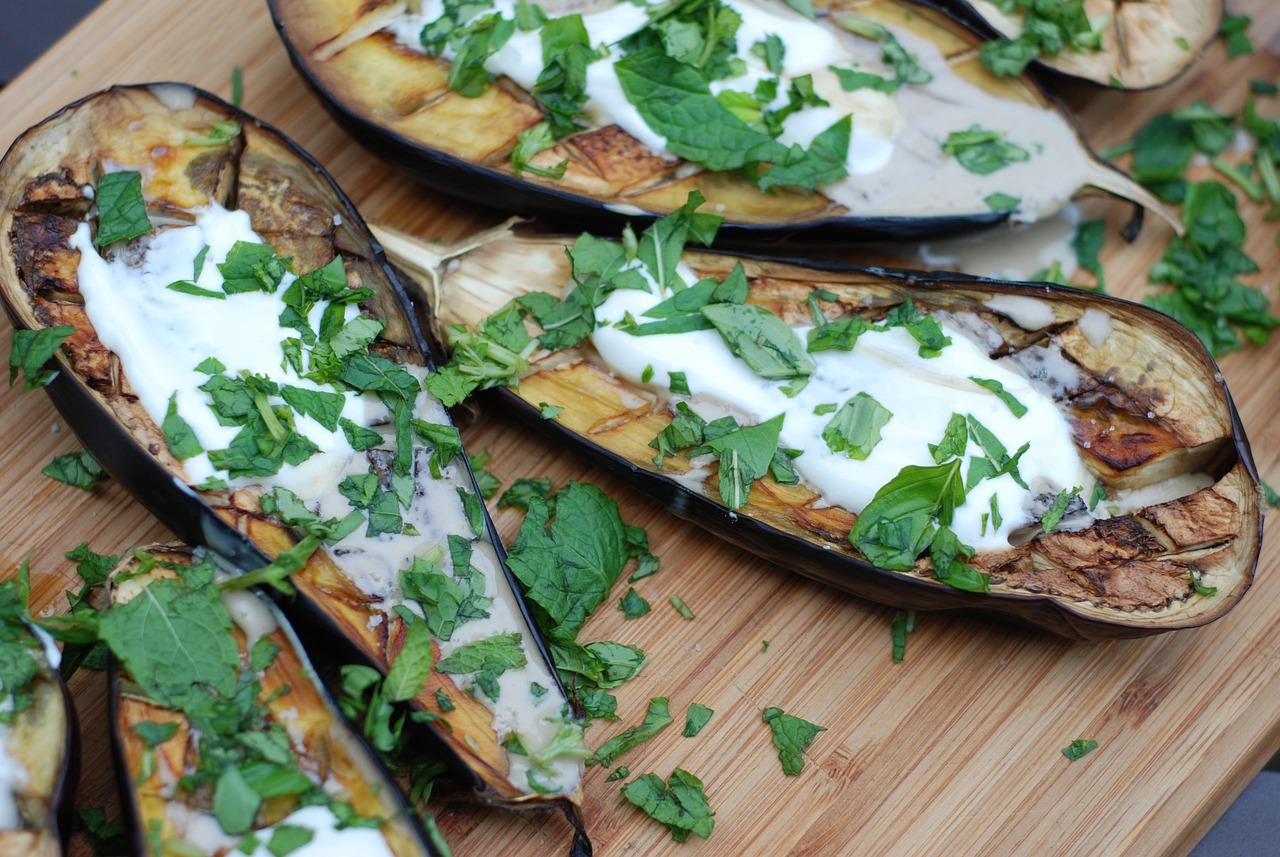
There are two ways to cook eggplant, and only one of them is patient. The quick way gives you spongy, oil-logged slices that never quite soften. The slow way, the one I learned from a friend's mother who cooked on the coast near Antalya, gives you something closer to a jam — collapsing, faintly smoky, sweet in a way that has nothing to do with sugar. That is the eggplant I want in late summer, when the markets are heavy with the glossy dark ones and the idea of standing over a hot pan feels absurd.
The trick is simple: cut them in half, score the flesh, salt them, and then let the oven do almost everything. No flipping, no fussing. You are not roasting to brown so much as roasting to transform. What comes out is soft enough to spread on bread and sturdy enough to sit on a plate as a proper dish, especially once you spoon tahini sauce over the top and scatter it with pomegranate seeds, whose little burst of tartness keeps the whole thing from becoming too rich.
Eggplant is mostly water and air. When you roast it fast, the water steams out and the flesh stays fibrous. When you roast it slowly, the cell walls break down gradually and the texture turns custardy. The flesh also concentrates in flavor, which is why a two-hour eggplant tastes deeper than a twenty-minute one. I usually roast at around 180°C (350°F) for an hour to ninety minutes, depending on the size, until a knife slides in with no resistance at all and the cut surface looks collapsed and glossy.
You can do this ahead. In fact, I think the dish is better when the eggplant comes to room temperature and sits for a bit, absorbing the tahini and lemon. It also travels well, which makes it a reliable thing to bring to a table where you are not sure what else will be served.
Tahini is the part people get nervous about. It seizes when you add lemon juice, turning thick and grainy, and the instinct is to add more water and stir harder. That is actually correct. Keep adding cold water a spoonful at a time and keep stirring; the sauce will loosen, lighten, and turn silky, almost like a thin mayonnaise. Finish with a grated garlic clove, a good pinch of salt, and more lemon than feels reasonable. Taste it on a piece of the eggplant before you commit.
To serve, spread the tahini on a platter, lay the eggplant on top, and spoon a little more sauce over. Scatter pomegranate seeds, a few torn mint leaves, and a drizzle of olive oil. Flaky salt at the end. Bread on the side, obviously, and maybe a sharp sheep's cheese if you want it to be dinner rather than a side. This is one of those dishes that looks like more effort than it was, which is a quality I admire in a recipe.
