Entertaining
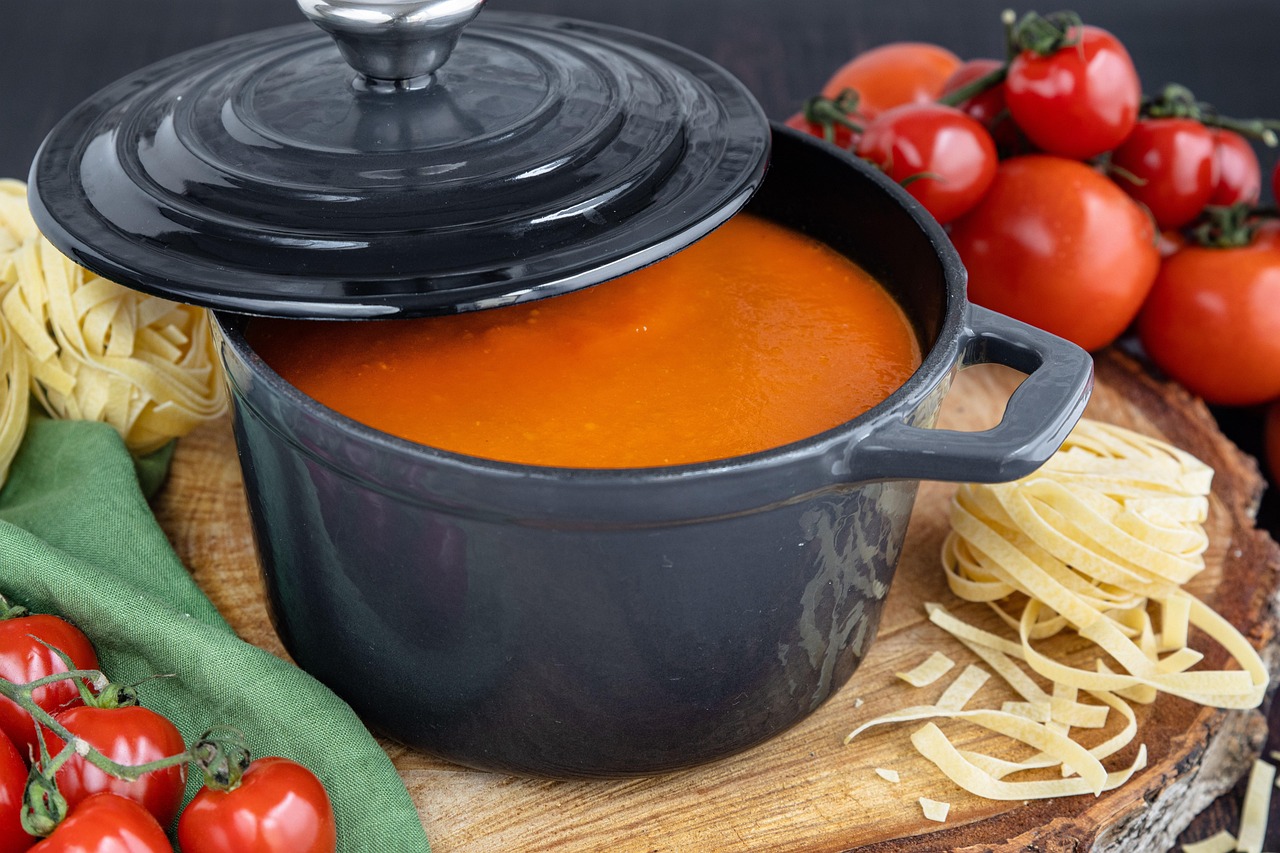
There is a moment in early autumn when the tomatoes at the market are still plentiful but no longer perfect. They are a little mealy, a little pale, and they will not be good raw. This is the moment for sauce. A slow-cooked tomato sauce does not require peak-season fruit; it requires time, olive oil, and a little patience, and it turns mediocre tomatoes into something deeply savory and sweet. I make a big batch in September and freeze it in portions, and it carries me through the winter.
The technique is old and unglamorous. You cook the tomatoes down slowly with aromatics until the water evaporates and the flavor concentrates. There is no trick, no secret ingredient. What you get out is proportional to what you put in and how long you are willing to wait.
Start with good olive oil and a lot of it — more than feels right. Add a sliced onion and cook it gently until it is soft and sweet, not browned. Add garlic, then the tomatoes, roughly chopped, with their juices. A pinch of sugar if the tomatoes are particularly acidic, a good amount of salt, and a few basil stems if you have them. Simmer, uncovered, for an hour or more, stirring occasionally, until the sauce is thick enough that a spoon leaves a trail.
If you want a smoother sauce, pass it through a food mill or blend it. I usually leave mine chunky, because I like the texture and because it is less work. A glug of olive oil stirred in at the end, off the heat, makes it glossy and rounds out the acidity.
This sauce is a base, not a finished dish. Toss it with pasta and a little pasta water; spoon it over polenta, beans, or eggs; use it as the start of a soup or a braise. It freezes beautifully in small containers, and a portion thaws in minutes on the stove. I keep some in the fridge for the week and the rest in the freezer for the months when tomatoes are a memory.
The shoulder seasons are the best time to make sauce, because the tomatoes are cheap and abundant and you are not competing with the perfect ones. Buy a crate, clear an afternoon, and let the pot do the work. It is one of the most satisfying things you can do in a kitchen, and it pays you back all winter.
